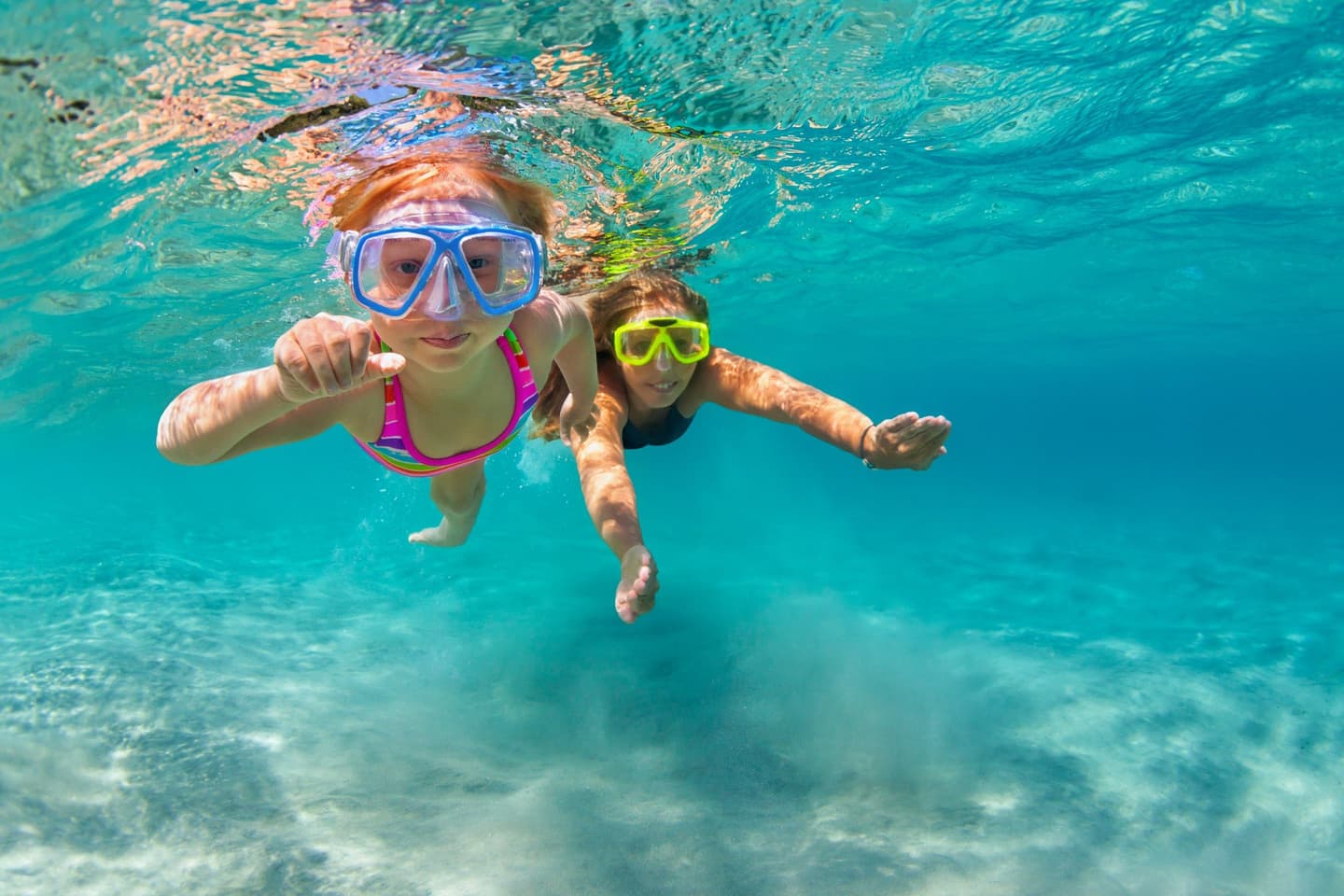
There is one rule that sorts the good spots from the disappointing ones. Fish live where there is structure, so a beach of plain sand gives you very little, and the edge where rock meets sand gives you almost everything. Every cove below is picked on that basis rather than on how it photographs.
The water around Ibiza is clear for a second reason: posidonia, the seagrass that covers much of the seabed here. The meadows filter the water and hold the sand in place, and they are a protected habitat, which is why boats are not allowed to anchor on them.
The reliable ones
Cala Salada, north of San Antonio, turns to rock within a few metres of the sand, which makes it the easiest introduction on the island. In high season the road closes during the day and a shuttle runs instead, so check before you drive up.
Cala Xarraca on the north coast has a rocky, uneven bottom and the most varied fish of the easily reached spots. It is more interesting than it is comfortable.
Cala Mastella on the east coast is small, sheltered and shallow, with rock along both edges. It works well with children who are still getting used to a mask.
For something bigger
Es Vedra and the Bledes are the serious option, and both mean a boat. The water around the offshore rocks is deeper and clearer than anything you reach from a beach, and the drop-offs hold much larger fish.
Trips run out of San Antonio and from the south coast through the season. Our team can point you at operators who take snorkellers rather than divers.
What you will see
Wrasse, bream, damselfish and mullet over the rock, with the occasional octopus in a crevice. Over posidonia the fish are fewer but the water is at its clearest.
What you will not see is coral. The Mediterranean does not work that way, and anyone expecting tropical colour will be disappointed by water that is otherwise excellent.
Practical
Mornings are better than afternoons. The wind usually gets up through the day, and chop on the surface costs you visibility even when the water below is clear.
Go where the coast is sheltered from whatever direction the wind is coming from. On a day with northerly wind the south coast is calm, and the reverse holds too.
Bring your own mask if you are particular about fit. Rental sets at the beaches are serviceable rather than good.
Quick answers
Where is the easiest snorkelling? Cala Salada, where the rock starts a few metres out.
Which spot has the most fish? Cala Xarraca, on the north coast.
Is it good with children? Cala Mastella is shallow and sheltered.
Do you need a boat? Only for Es Vedra and the Bledes.
Is there coral? No. This is the Mediterranean.
When is visibility best? Early morning, before the wind picks up.