
Val d'Isère does not have its own airport or railway station. The village sits at 1,850 metres at the head of the Tarentaise valley, and the last part of getting there is always an uphill climb, whichever way you come.
Because that final stretch is the same whichever route you take, the thing that really matters is picking a combination of flight and transfer with the least waiting around. It can sometimes be more efficient to fly into the airport that is furthest away, since that is the one with the most flights and connections, while the airport closest to Val d'Isère only has a handful of arrivals a day. We will walk you through each option below.
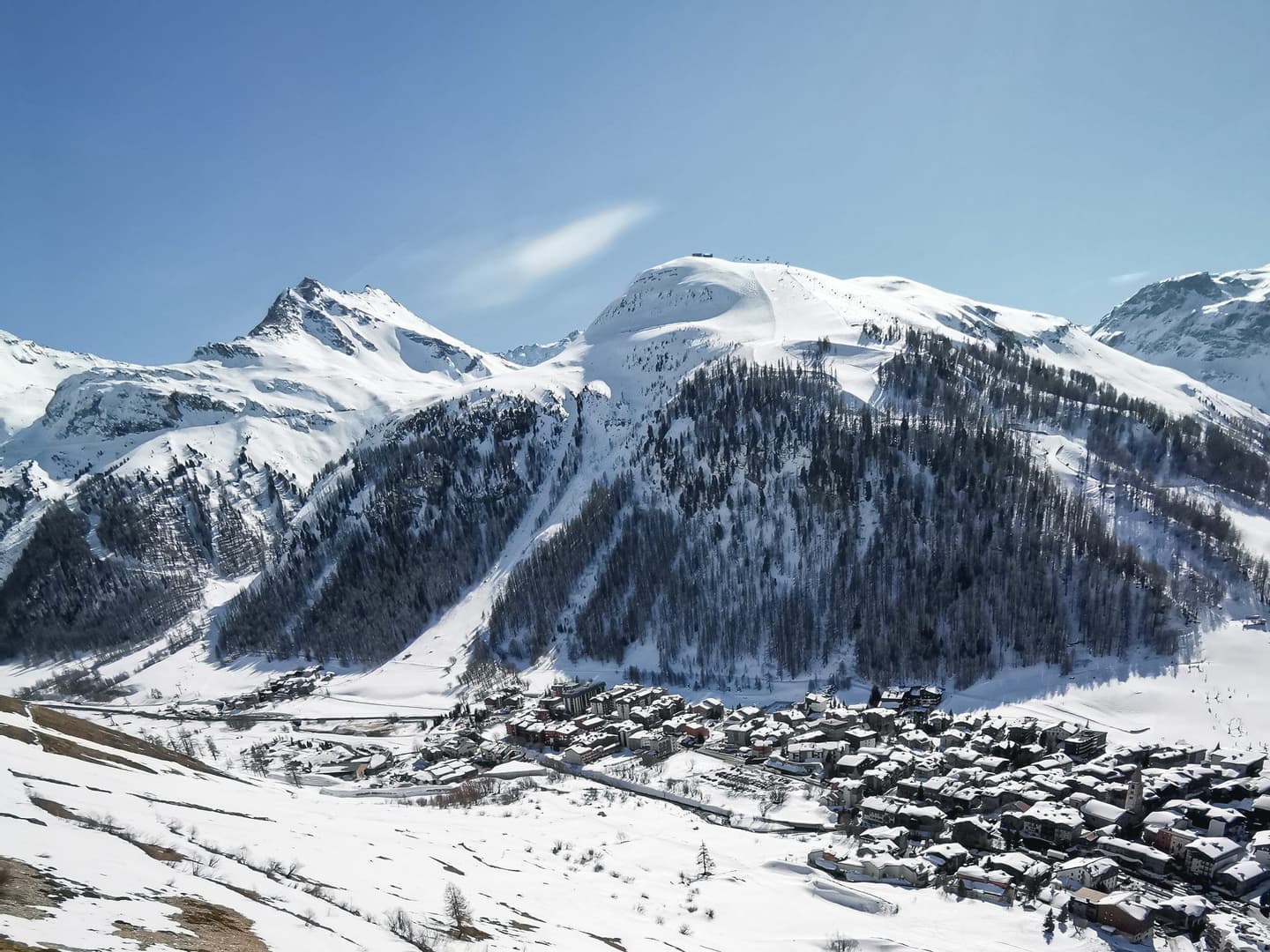
The four airports, nearest first
Chambéry (CMF), around 144 km, about 2 hours by road
Chambéry is the closest, which gives you the shortest transfer and a small arrivals hall you can walk straight through. Its winter timetable is built around ski weeks, with flights scheduled around typical changeover days. Flights are the thing to sort out first here, as the schedule is fairly thin and there are not many rental cars or public transport options once you land. Arrange a transfer early, though, and Chambéry is comfortably the quickest way in.
Grenoble (GNB), around 180 km, about 2.5 hours by road
Grenoble sits a little further out, and it is a good option thanks to its spread of direct winter flights from cities that Chambéry does not serve. The situation on the ground is much the same as Chambéry, so if none of you fancies driving, the easiest way to arrive is with a transfer arranged in advance.
Lyon-Saint Exupéry (LYS), around 220 km, about 2.5 hours by road
On a map, Lyon and Geneva look about the same distance from the village, but on the road they are not. The drive from Lyon is more direct and tends to be quicker, and because it is a large airport, you get plenty of choice in flights, rental cars and transfers. That makes it a good fit for groups who want a major hub but would rather skip the Geneva approach. The one thing to keep an eye on is Saturday traffic through Albertville and Moûtiers, where all the ski-week traffic in the Tarentaise comes together at once.
Geneva (GVA), around 220 km, about 3 hours by road
Geneva is the furthest of the four, and yet it is still the airport most of our guests choose. It is the biggest hub in the region and carries the long-haul connections the French airports do not, so it makes sense if you are flying in from outside Europe, or from a smaller airport with only one useful departure a day. If you are renting a car on the Swiss side, it is worth mentioning when you book that you will be driving into France, and checking which registration they give you, because Swiss-registered cars cannot be taken into France by EU nationals. UK residents fall outside that rule since Brexit.
And if you cannot find a sensible flight into France or Switzerland, it is worth a look at Turin: around three and a half hours on a quiet day, and a little longer on a busy Saturday.
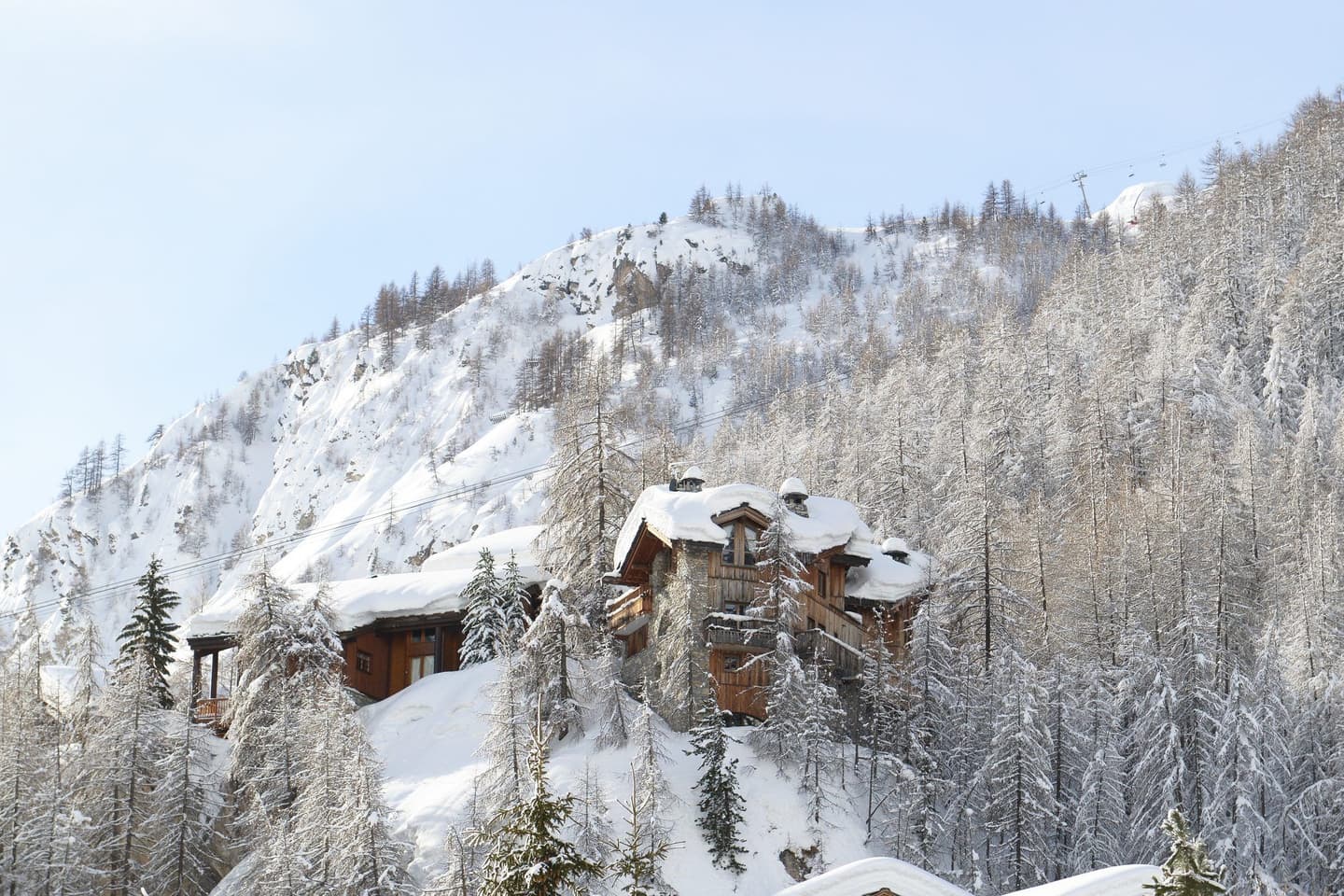
Getting from the airport to the village
Private transfer. A private transfer means a driver waiting for you in arrivals with your name on a board, no queue at a rental desk and no stops in other villages along the way. For groups of four and up, it becomes the practical choice as much as the comfortable one. The best drivers get booked up early over Christmas, New Year, February half term and Easter, so those are the weeks to plan ahead for. Most transfers take the route via Annecy rather than the Chambéry autoroute.
Shared transfer. A shared transfer makes sense for one to three people. Once you are a group of four, a private car usually makes more sense, so there is not much reason to share. Seats depend on how many others are travelling, which makes it worth asking early.
Bus. The bus is the cheapest way up and also the slowest, at around four hours from Geneva or Lyon with stops on the way. The main thing to be aware of is the timetable, as departures become less frequent later in the day, which makes the bus a natural fit with a daytime flight.
Rental car. A rental car is handy if you want to explore the valley during the week, and easy to do without if you do not, since Val d'Isère is walkable and the free village bus covers the rest. Stay somewhere ski-in, ski-out and you are on the snow straight from the door, which cuts the getting-around down even further. For the final climb, you will want winter tyres or chains.
Helicopter. There is also a helicopter, at around forty minutes from Geneva and roughly fifty from Lyon. It is good to know the option is there, especially for groups for whom the time saved is worth more than the cost.
One handy tip. You can build a supermarket stop into a private transfer on the way up. A click-and-collect order picked up en route usually costs nothing extra, whereas stopping to do a proper shop does. This works best arranged in advance, so the stop is guaranteed rather than left to chance.
By train
The nearest station is Bourg-Saint-Maurice, about 30 kilometres down the valley, with a road transfer of 40 to 50 minutes to finish the journey. The local buses are timed around the train arrivals.
From Paris Gare de Lyon, the TGV gets you to Bourg-Saint-Maurice in just under five hours. From Amsterdam, you are looking at around eight and a half. There are also direct seasonal ski services from London, and since the details change from one season to the next, it is best to check the operator's current timetable rather than last year's route.
The train works especially well for families who would rather not go through airports twice, groups travelling with a lot of kit, and anyone keeping an eye on their emissions.
One thing to keep in mind is that an overnight service gets you in early, often before the house is ready. Keys are not usually available first thing, and a Saturday train can have you at the door a good few hours before the clean is finished. That's often enough time to get straight onto the slopes, with the luggage sorted once the house is ready.
Driving yourself
There are two main routes in, depending on which airport you fly into.
From Geneva, the longer of the two: follow the signs for France out of the airport, join the A40 towards Chamonix, then the A41 to Annecy, carry on through Annecy and Chambéry, and take the A43 towards Albertville. From Albertville you follow the N90 to Moûtiers and the D902 to Bourg-Saint-Maurice, and Val d'Isère is signed from there.
From Lyon, the easier drive: head out of the airport following Grenoble and Chambéry onto the A43, stay on it until the N90, then it is Albertville, Moûtiers, Aime and Bourg-Saint-Maurice.
Once you are past Annecy, the signs work on place names rather than road numbers. French signage has a habit of going quiet for a while and then giving you the name you were looking for at the very last moment.
Please take real care over this one: the Col de l'Iseran and the Col du Petit Saint-Bernard are closed from November to June. Route planners will still send you over the Iseran on the Italian approach in the middle of winter, even though the pass is shut. So if your app is routing you through Italy, ignore it and take the valley routes above.
Coming from the UK, Calais to Val d'Isère is a little over 1,000 kilometres and around nine to ten hours of driving with short breaks. The motorway tolls run the whole way and take cards. Two speed cameras are worth knowing about: one on the return leg as you approach Calais, and one in the tunnel below Val d'Isère on the way down to Moûtiers.
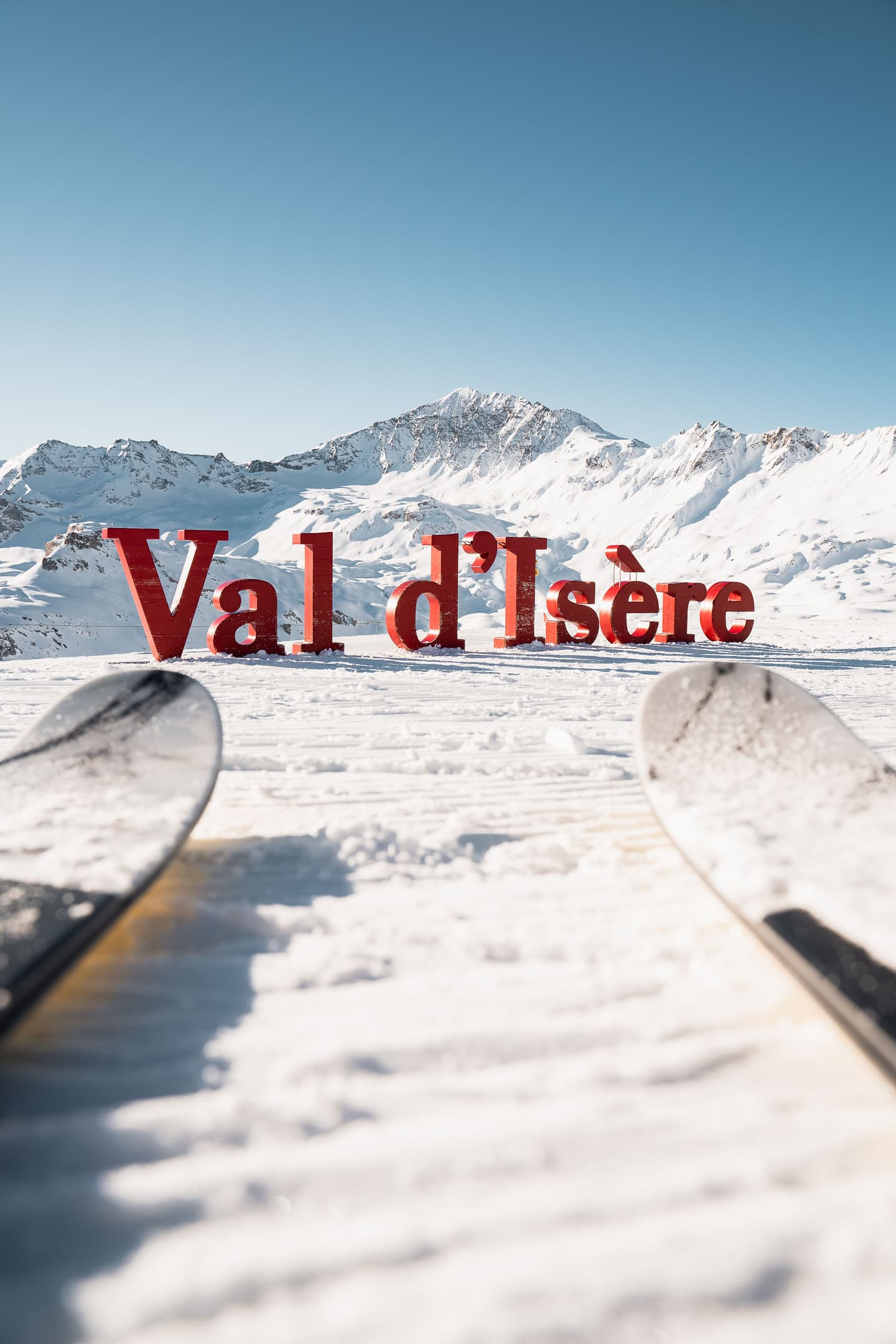
When you arrive
Check-in is from four in the afternoon, and where the cleaning is finished sooner, you can often get in a little earlier. On a busy changeover day that is not always possible, so if you land before the house is ready, there is somewhere to leave your luggage, change and warm up before heading out to the lifts.
Arriving late is no trouble at all, as long as someone knows to expect you. Just let reservations know in advance and the keys will be waiting in a lock box, with instructions and a number to call. A quick word ahead of time is all it takes.
Quick answers
Is there an airport in Val d'Isère? No. The closest is Chambéry, around 144 km away, then Grenoble, Lyon and Geneva.
Is there a train station in Val d'Isère? No. Bourg-Saint-Maurice is the nearest, 30 km down the valley, with a 40 to 50 minute road transfer.
Can you get a train from Paris? Yes, the TGV from Gare de Lyon to Bourg-Saint-Maurice takes just under five hours, and then it is a short road transfer.
How long is the transfer from Geneva? Around three hours in normal conditions, and longer on a peak Saturday, in heavy snow, or both.
Do I need a car in Val d'Isère? No. The village is walkable and the local bus covers the rest, so a car is really only worth it if you plan to leave the valley during the week.
Which airport is best overall? It depends on what you are after: Geneva for the choice of flights, Lyon for the easier drive, and Chambéry when the schedule happens to suit you.
Before you book the flight
The order matters more than which airport you choose: settling the transfer that suits your group and arrival time first, then booking the flight around it, is what makes the awkward waits disappear, since the flight becomes the last piece to fall into place rather than the first.
And if you would like a hand pulling the transfers together, our team can do just that.
Discover Val d'Isère with One of a Kind Travel
Once your route is sorted, the rest of the week looks after itself. Have a look at our chalets and apartments in Val d'Isère, and start picturing the week ahead.