
Val Thorens, in the French Alps, at 2,300 metres. That's the answer most people are actually after: the highest village in Europe that you can stay in, walk around and ski home to. It's a question our advisors hear a lot, usually from someone weighing up two ski weeks and using altitude as the tiebreaker, so it's worth a proper answer rather than just the headline number.
There's a second answer too, and it matters more if snow is the whole reason you're comparing in the first place. The highest point a lift can actually take you in Europe isn't anywhere near Val Thorens. It's the Klein Matterhorn, above Zermatt in Switzerland and Cervinia in Italy, at 3,883 metres, shared between the two as the highest lift station on the continent.
So "highest" really splits into two different questions: how high do you sleep, and how high can you get? They point you to different places, and it's worth knowing the difference before you book, because a village's base altitude tells you a lot less about the skiing than the brochures like to suggest. It's usually the first thing our advisors talk through with someone comparing resorts.
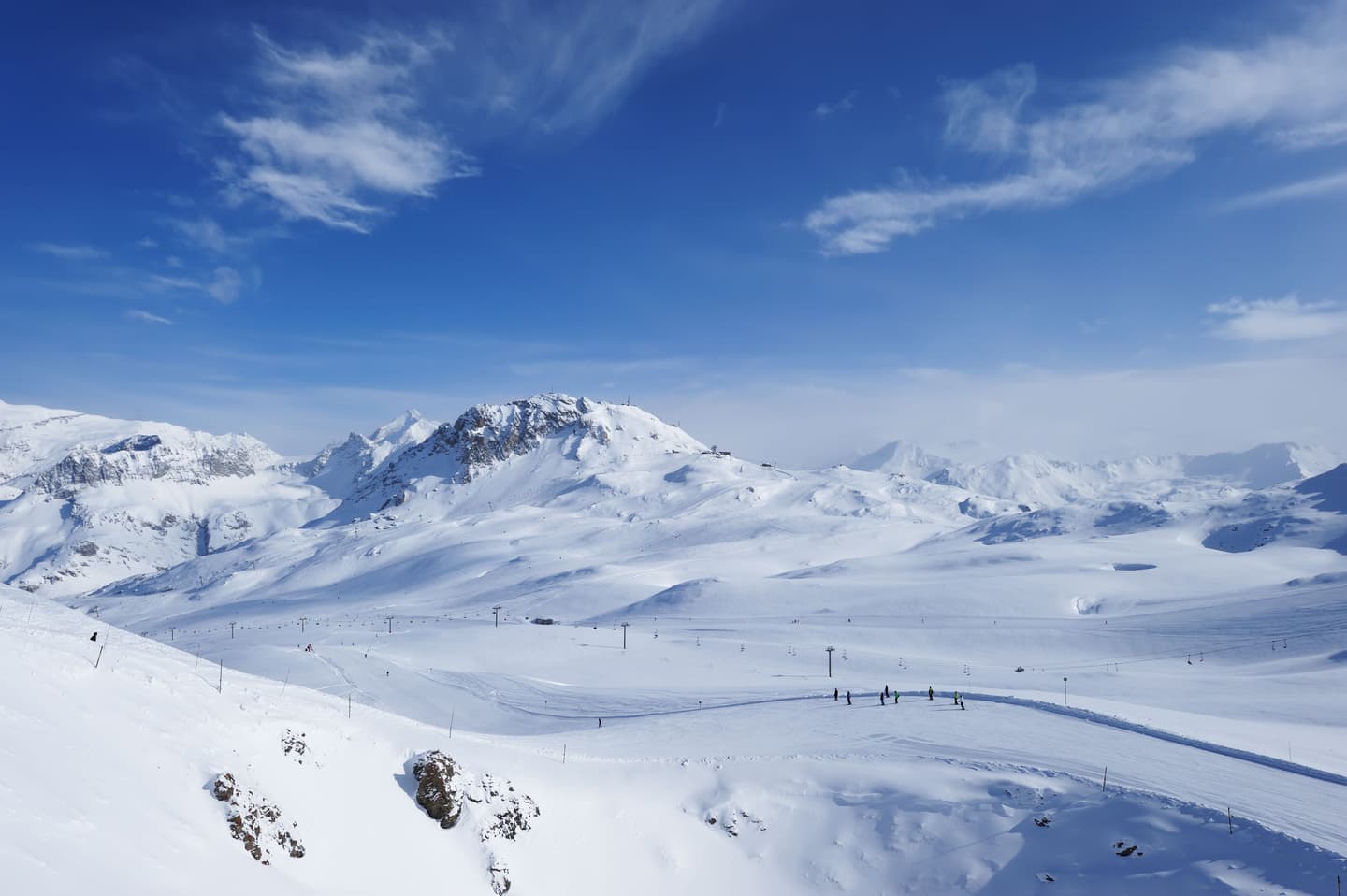
The highest village: Val Thorens
Val Thorens sits at 2,300 metres, higher than any other village in the Alps, and it is part of the Three Valleys, the largest linked ski area in the world. Being that high buys two things: snow that tends to arrive early and stay late, giving it one of the longest seasons anywhere in the Alps, and pistes that run back to the village itself, so you can almost always ski to your own front door.
Expect: a purpose-built place. Val Thorens was built for skiing in the 1970s, above the treeline, and it looks like it: there is no old church, no cobbled lane, no stone farmhouse that used to be a barn. The altitude and the architecture come from the same decision, build high for the most reliable snow, or lower for something with more life to it, and that trade-off is worth weighing alongside the altitude itself.
Good for: some of the most reliable snow in the Alps, a long season, and skiing that starts at the door.
The highest lift: Klein Matterhorn
At 3,883 metres, the Klein Matterhorn cable car above Zermatt and Cervinia takes you higher than anything else in Europe, and the glacier skiing up there runs through the summer.
This is the number to look at if what you want is high-altitude terrain rather than a high bed, because it's the top of the ski area that keeps the snow skiable, not the altitude of your pillow. A village at 2,300 metres with lifts to 3,200 and a village at 1,850 metres with lifts to 3,400 are not as different as their base altitudes suggest, and on a warm week in April the second one is often the better place to be.
Where Val d'Isère fits
Val d'Isère is not the highest village in Europe and does not need to be. It sits at 1,850 metres, and the pistes it shares with Tignes climb to around 3,450 metres on the Grande Motte glacier, which puts the top of its ski area within a few hundred metres of the highest lift on the continent while the village below it stays a real village.
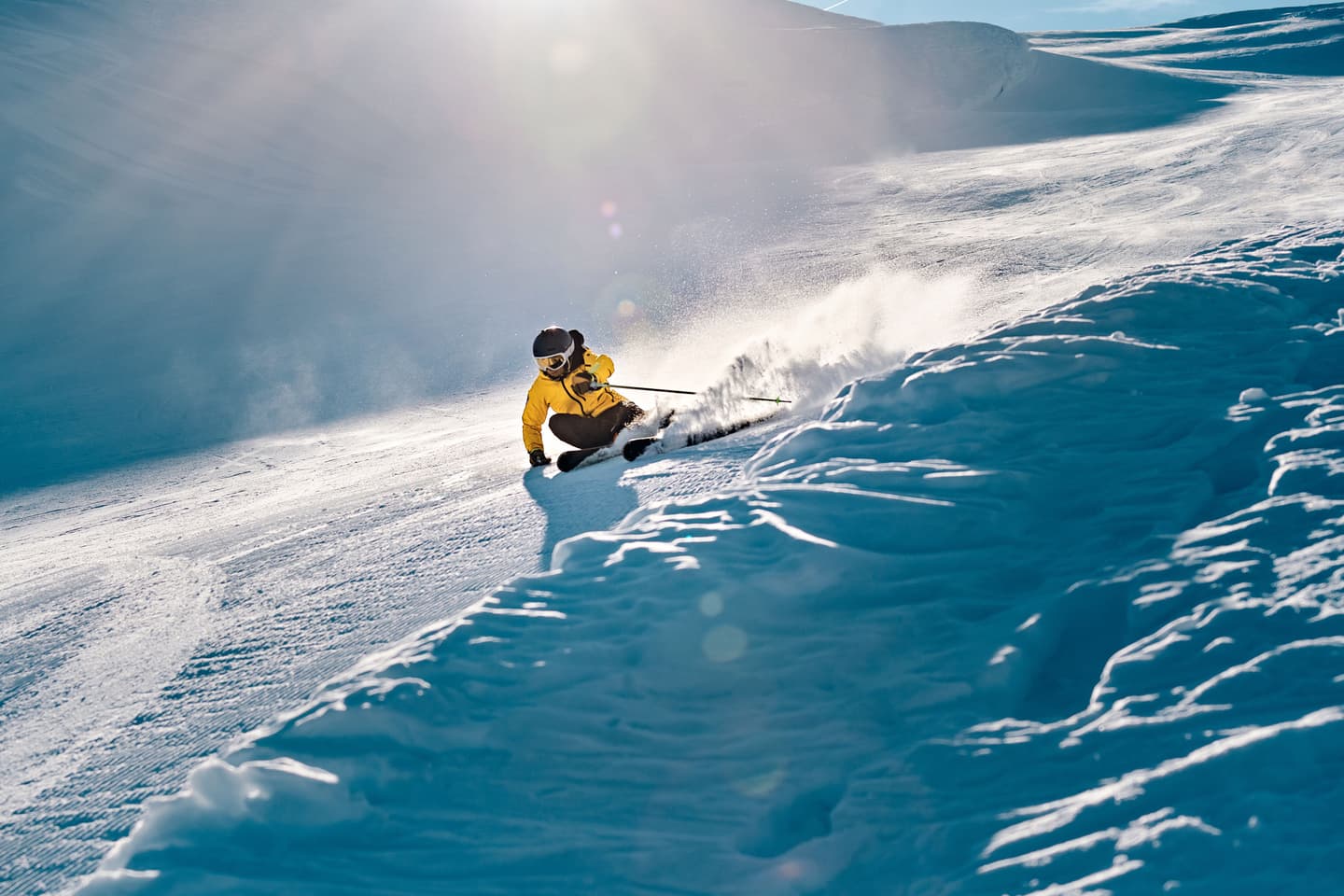
What that combination gives you is a high ski area sitting above a village that was a village first: stone houses, a church the settlement grew around, narrow streets at Le Fornet where the old families still live, and roughly 300 kilometres of linked runs above it. Beginners get free nursery lifts and the gentle terrain on Solaise, everyone else gets reds through the middle of the mountain, steep blacks, and serious off-piste beyond the marked runs. Stay somewhere ski-in, ski-out and the mountain starts at the door here too.
In our experience, that reliable snow isn't down to altitude alone. It's the combination: the height, the way the slopes catch or avoid the sun, and a lift company that keeps investing in snowmaking and grooming year after year.
Why altitude is not the whole answer
Altitude is the easiest thing to compare between two destinations, which is why it ends up on every shortlist, and it gets more weight than it deserves. Three things matter alongside it, and they're worth asking about wherever you're looking, not just here.
Aspect. Which way the slopes face changes how long the snow lasts more than a couple of hundred metres of elevation does. A north-facing red at 2,200 metres can hold snow better than a south-facing one at 2,600, because the sun does more damage than the thermometer.
Where the top of the area is, not the bottom. A high village is comfortable. A high ski area is what keeps you skiing in a warm April, since the lifts can always take you up to where the snow still is.
Whether you want to be in a village at all. The highest places in the Alps are, almost without exception, built above the treeline in the 1960s and 1970s for the snow rather than for the setting. That's the real trade-off: reliable altitude on one side, an old village with a history to come back down to on the other, and it's worth knowing which one matters more to you before you book.
Quick answers
What is the highest ski resort in Europe? Val Thorens, France, at 2,300 metres.
What is the highest ski lift in Europe? The Klein Matterhorn, above Zermatt and Cervinia, at 3,883 metres.
Is Val d'Isère high? The village is at 1,850 metres and the linked ski area reaches about 3,450 metres, which is high where it counts.
Does higher always mean better snow? Not on its own. Aspect, the altitude of the top of the ski area, and how much a lift company invests in the mountain all matter alongside it.
Discover Val d'Isère with One of a Kind Travel
High skiing above a village with some history to it is a specific combination, and it's where we think it comes together best. Our chalets and apartments in Val d'Isère range from the old stone streets to the ski-front.