
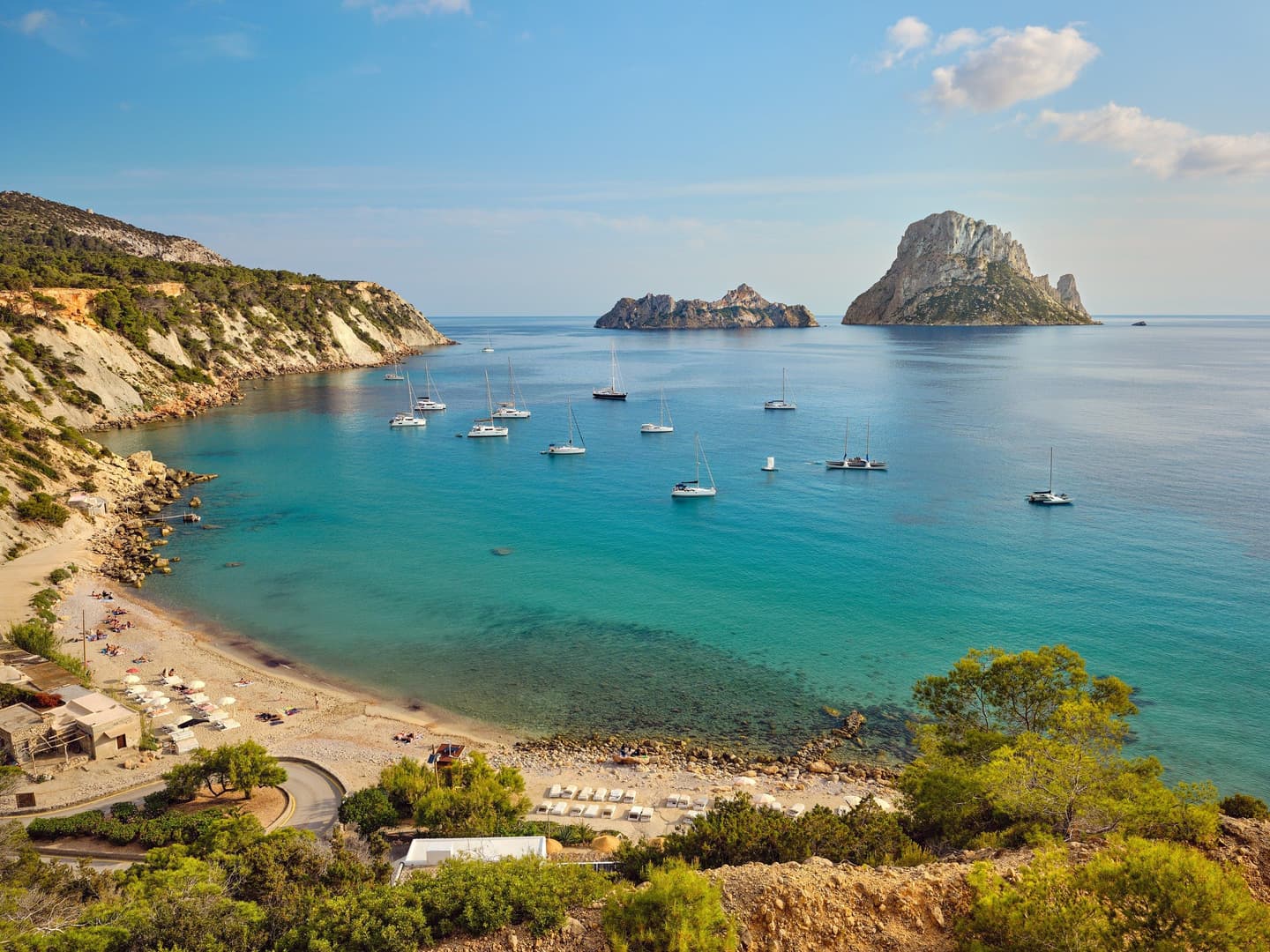
Es Vedrà is a limestone rock rising 413 metres straight out of the sea, about two and a half kilometres off the south-west coast at Cala d'Hort. Nobody lives on it, nobody may land on it, and the three good places to see it from are all on land you can reach by car.
It is protected as part of the Es Vedrà, Es Vedranell and Western Islets nature reserve, designated in 2002 and covering nine islets along this stretch of coast. The reason is rare seabirds and plants that grow nowhere else, which is also why the boat trips circle it rather than stop.
The three places to see it from
Cala d'Hort beach is the easy one. The rock sits square in the middle of the view, there are restaurants on the sand, and you can be swimming in front of it within a minute of parking. This is the version that works with children and with anyone who does not want to walk.
The Torre des Savinar clifftop is the one the photographs come from. A rough track climbs from the Cala d'Hort road to a parking area, and from there it is a short walk up to the eighteenth-century watchtower, with the rock below you and Es Vedranell alongside it. The track is unsurfaced and rutted, so a low car needs care, and the last part is on foot regardless.
From the water. Boats run out from San Antonio and from the marinas along the coast, and circling the base is the only way to get a sense of the scale of the thing. You still cannot land.
What is true, and what is not
The rock has attracted stories for a century and they are worth separating out.
The nature reserve, the empty island and the landing ban are all real. It was briefly occupied in the 1850s by a Carmelite priest who reported visions, and it has had a lighthouse keeper's hut and a goat population at various points.
The claims about it being the third most magnetic place on earth, or the tip of Atlantis, or a reliable spot for UFO sightings, have no source behind them beyond repetition. They are part of what people enjoy about the place rather than facts about it, and the sunset does not need them.
When to go
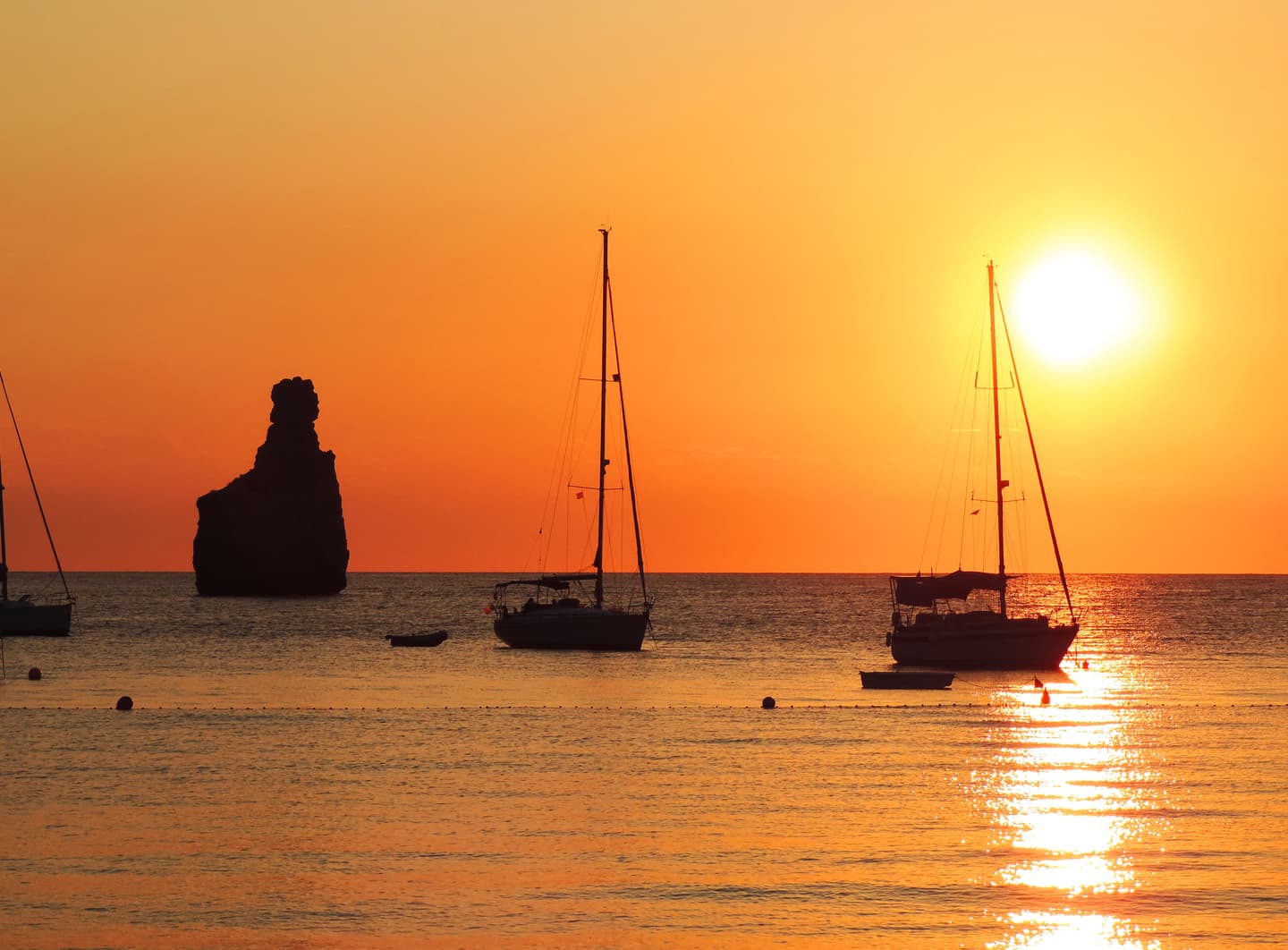
Late afternoon, and then stay. The rock faces west, so the middle of the day flattens it and the last hour before sunset is when it does what it is famous for. In July and August the clifftop parking area fills well before sunset and the track down afterwards is dark and rough, so a torch in your pocket is sensible.
Out of season it is empty and just as good. February and March give you the same view with nobody in it.
Quick answers
How tall is Es Vedra? 413 metres, which is higher than it looks until something passes it.
Can you go on Es Vedra? No. It is a protected nature reserve and landing is not permitted.
Where is the best view? The Torre des Savinar clifftop for the photograph, Cala d'Hort beach for the afternoon.
Can you get there by car? To both viewpoints, yes. The clifftop track is rough but short.
Is the sunset worth it? Yes, and it is the reason most people come. Arrive an hour before.
Is there anywhere to eat? There are restaurants on Cala d'Hort beach, which is the practical answer, since there is nothing at all at the clifftop.
Making the trip work
Cala d'Hort is about half an hour from San Antonio and forty-five minutes from Ibiza Town, so it is an afternoon rather than a stop. The shape that works is the beach and lunch first, then up to the tower for the last of the light.
While you are up there, the old quarry below the tower is worth the scramble: that is Sa Pedrera, the place people call Atlantis. The beach itself is covered in our guide to Cala d'Hort.