
Atlantis is not a lost city. It is Sa Pedrera de Cala d'Hort, a sandstone quarry cut into the cliff below the Torre des Savinar. The stone that came out of it went into the walls of Dalt Vila and the watchtowers built to see pirates coming. The name is a nickname, and it has stuck because of what the place looks like rather than what it is.
What it looks like is a set of terraces, staircases and square basins cut into soft pale rock, dropping down to the water. Quarrymen made the shapes. Everyone since has added to them.
Getting down there
The path starts from a parking area on the Cala d'Hort road, not from the Es Vedrà viewpoint plateau, and picking the wrong one is the commonest mistake people make.
From there it is about thirty minutes down, and the first stretch is the hardest: a loose, unmarked path over rubble that turns into slabs of rock tilted at something like forty-five degrees. Lower down it becomes eighty metres of soft dune sand, easy going down and the part that hurts on the way back up.
The return climb takes about an hour, so more water than feels necessary is the sensible amount. This is a scramble rather than a walk, in full sun for most of its length, with no shade and nothing to buy at the bottom. Footwear is the one thing worth getting right: trainers with some grip rather than sandals.
What is carved there
The quarry workings are the bones of it: stepped terraces, cut channels, and rectangular basins that fill with sea water and sit still enough to swim in.
Into those, over about sixty years, people have carved faces, spirals, names and figures. A cave partway down holds a painted mural of an Asian deity, which is the image most people come back with. Near the top of the path there are stone circles built by hippies and still used for ceremonies, and the custom is to add a stone or leave something small rather than take anything.
None of the carving is ancient. It is hippy and visitor work laid over a working quarry, and knowing that makes it more interesting rather than less.
When to go
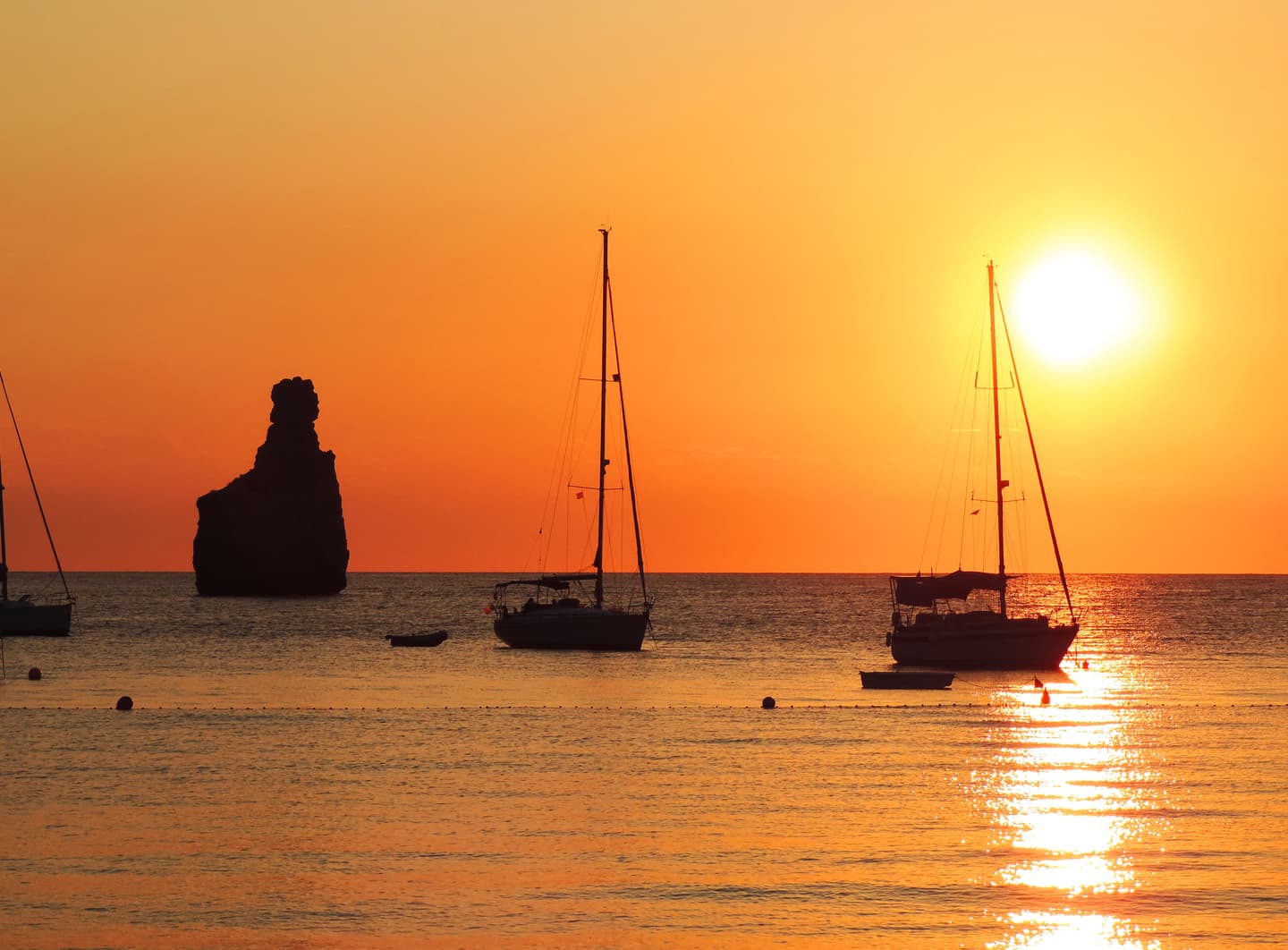
Early morning, and not in July or August unless you start at eight. The climb back in the middle of an August afternoon is punishing, and people do get into difficulty on it.
Out of season is the better answer. March to May and October give you the same place at a temperature that makes the return climb ordinary rather than an event.
Quick answers
What is Atlantis in Ibiza? An old sandstone quarry, Sa Pedrera de Cala d'Hort, below the Torre des Savinar on the south-west coast.
How long is the walk? About thirty minutes down and an hour back up, over loose rock and then sand.
Is it difficult? Yes. It is a steep scramble with no marked path and no shade. It is not suitable for small children or for anyone unsure on rough ground.
Can you swim there? Yes, in the cut basins and off the rocks when the sea is calm. In any swell it is not a place to be in the water.
Is it free? Yes, and there are no facilities of any kind.
Where do you park? On the Cala d'Hort road at the marked area, not at the Es Vedrà viewpoint.
Is there a Buddha? There is a painted mural of an Asian deity in a cave partway down, which is what people mean by it.
If the climb is not for you
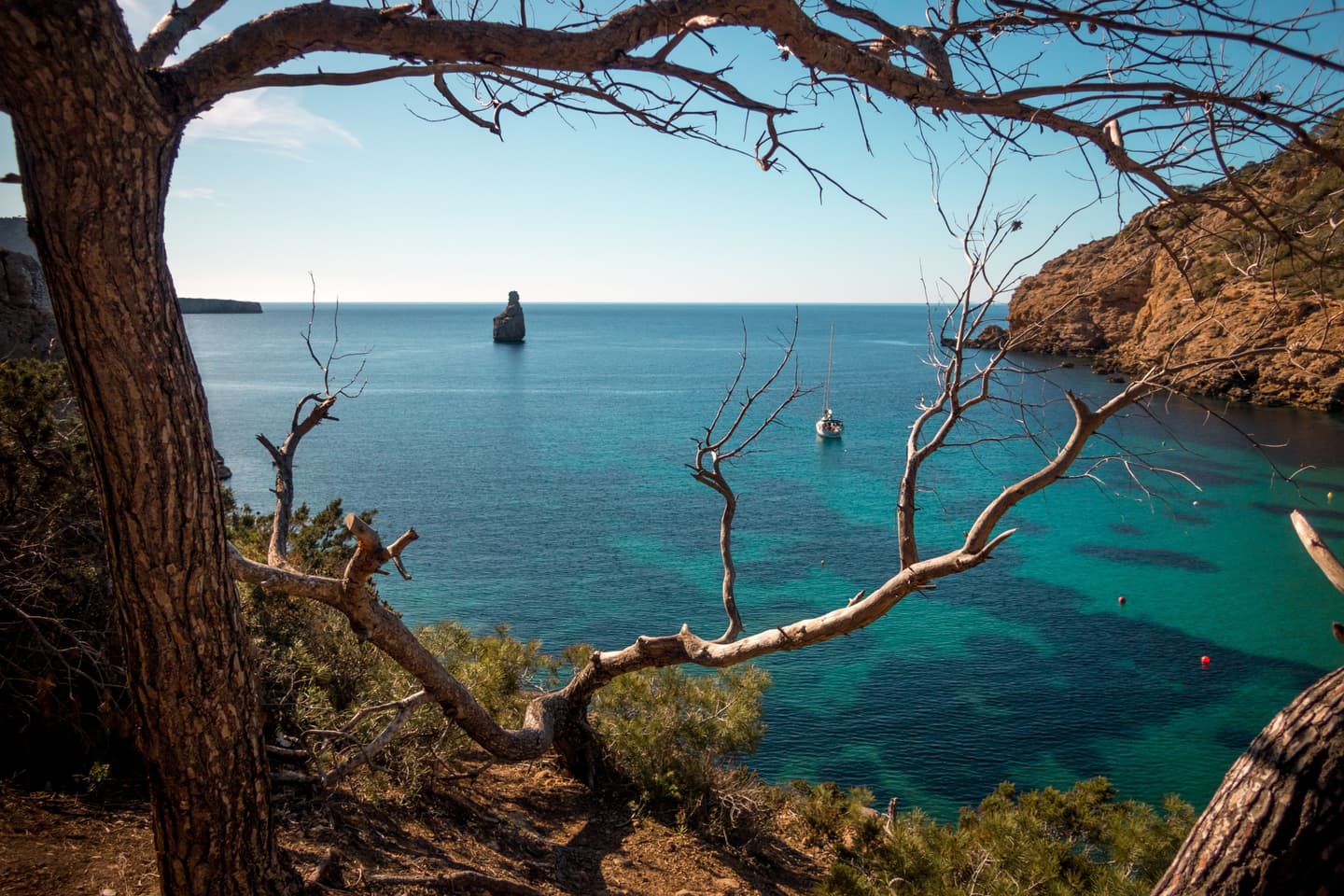
The view from the top is most of the reward and costs nothing. The Torre des Savinar clifftop looks straight down on the quarry and across at Es Vedrà, and the walk to the tower from the parking area is a few flat minutes.
For the swim without the scramble, Cala d'Hort is five minutes down the road with restaurants on the sand.